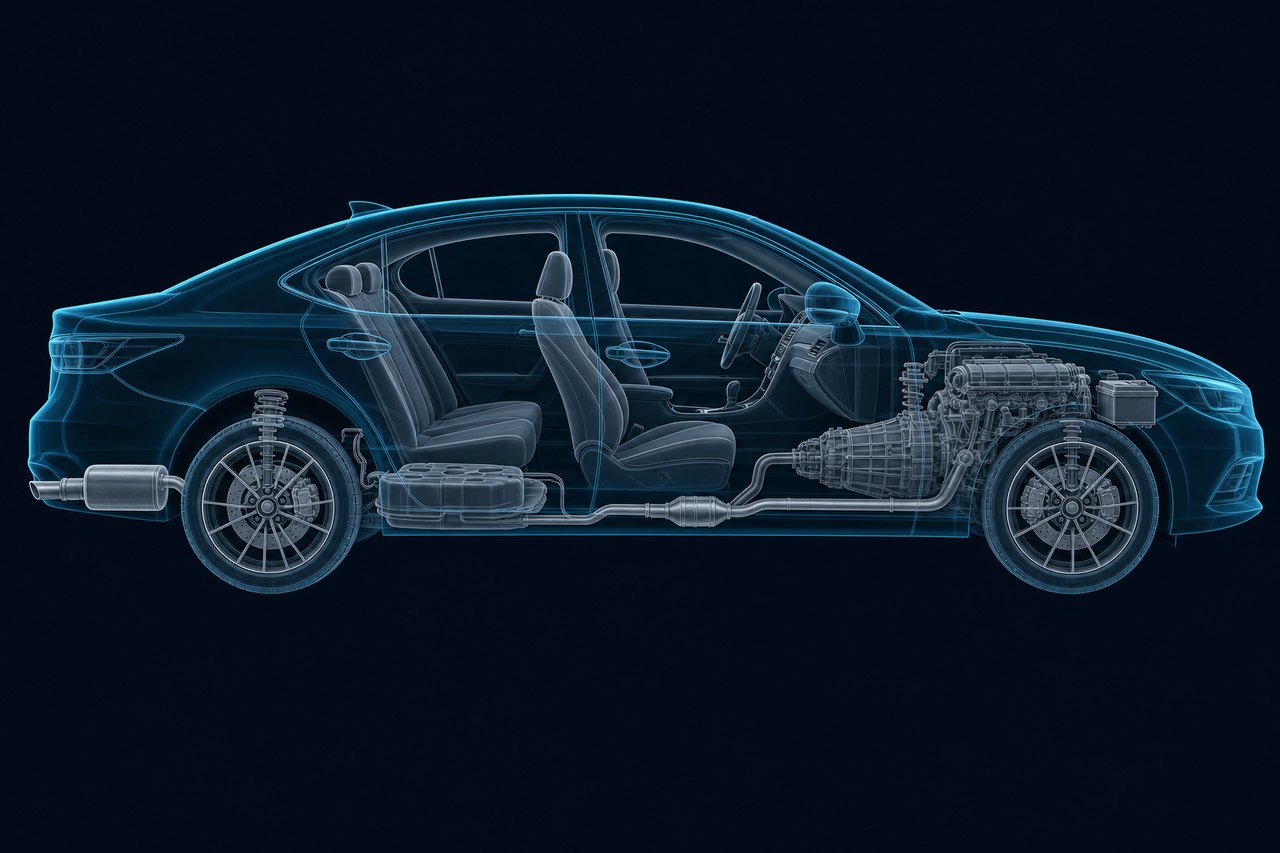
Nissan Versa 2023: common problems
Owners of the 2023 Nissan Versa filed 37 complaints with NHTSA, mostly about sudden loss of power. The most reported components are engine (23 complaints), power train (15) and vehicle speed control (13), and many reports say power drops after the engine stalls in the manual transmission version. There is one recall, for the driver's air bag inflator (campaign 24V154000). The data covers 0 crashes and 0 fires, and it comes from the United States, so the same model may differ in other countries.
37
NHTSA complaints
1
recalls
0
complaints with a crash
What owners complain about
- Engine23 complaints
Owners with manual transmissions say that after the engine stalls, the car restarts in a reduced-power "limp mode" and may not go above about 20 mph. Several mention fault code P2615 (a camshaft signal circuit code), and some say the dealer could not reproduce the problem. These are owner reports, not confirmed defects.
An OBD2 scanner usually picks this up. Engine problems often set codes a generic scanner can read, and some owners report P2615. Others say no warning light or code appeared.
- Power train15 complaints
Owners describe slow acceleration, high engine speed and a top speed of 18 to 30 mph, often cleared by turning the car off and waiting. One owner says the transmission and left drive axle were replaced under warranty after the car rolled backward on a hill.
An OBD2 scanner sometimes picks this up. A scanner may show engine-related codes behind a power loss, but transmission and axle faults can sit in other modules. Several owners saw no warning light.
- Vehicle speed control13 complaints
Owners report the car failing to accelerate, often right after a stall, and being unable to pass 20 to 30 mph until it is shut off for a while. One says the check engine light stayed on.
An OBD2 scanner sometimes picks this up. If the cause is an engine or sensor fault, a generic scanner may show a code. Some owners say no code or light appeared.
- Unknown or other9 complaints
These reports describe unexplained power loss, the engine shutting off while driving, and a battery that went dead again after replacement. One owner reports rainwater collecting under the hood, which the dealer called normal.
An OBD2 scanner sometimes picks this up. Power-loss and battery problems may leave codes, but one owner reports no engine codes stored. Water under the hood would not show on a scanner.
- Electrical system7 complaints
Owners report the car dying completely, with the battery and alternator checked and dealers unable to find the cause. Others report sluggish power after a stall, and one mentions code P2615.
An OBD2 scanner usually picks this up. Many battery, charging and electrical faults set codes a generic scanner can read, though these owners say dealers still found nothing.
- Fuel/propulsion system4 complaints
Owners report severe power loss after a stall, with the car unable to exceed about 40 mph even with the throttle fully open. One cites NHTSA investigation PE24007, and another reports code P2615 with the warning light on.
An OBD2 scanner usually picks this up. Fuel and engine control faults commonly set codes, and one owner saw P2615. Another reports no codes stored.
- Forward collision avoidance1 complaints
One owner reports repeated failure to accelerate properly, with code P2615 shown at the dealer. The owner says the dealer once suggested bugs on the front crash sensor as a cause. The complaint is mainly about acceleration.
Generic OBD2 barely sees this. Driver-assistance systems like the front crash sensor sit in modules a generic scanner usually cannot read. The engine code in this report is a separate matter.
Recalls
24V154000 · 27/02/2024
Because of a manufacturing issue, the driver's air bag inflator (the part that fills the bag with gas) may absorb moisture. The air bag could then deploy improperly and may not protect the driver in a crash, raising the risk of injury. Dealers replace the front driver's air bag assembly free of charge. Owner letters were mailed April 10, 2024, and Nissan customer service is at 1-800-867-7669. Nissan's recall numbers are PD103, PD104 and PMA34. Check your VIN with Nissan or NHTSA to see whether your car is included.
What to check if you own one
- Check your VIN with Nissan or on NHTSA's recall lookup to see whether recall 24V154000 applies to your car and has been done.
- If you drive the manual transmission and the car loses power after a stall, note the date, speed and whether a warning light appeared, then report it to the dealer in writing.
- Ask the dealer whether any software updates or service bulletins apply to power loss after a stall, and whether code P2615 has been stored.
- If the dealer cannot reproduce the problem, ask for a repair order that records your complaint so the visit is documented.
- If the car dies completely or the battery keeps going flat, ask the dealer to test the battery and charging system and keep copies of the results.
Frequently asked questions
What are the most common problems on the 2023 Nissan Versa?+
In the NHTSA data, owners most often report engine problems (23 of 37 complaints), followed by power train (15) and vehicle speed control (13). Most describe sudden loss of power, often after a stall in the manual transmission. These are owner reports, not confirmed defects.
Does the 2023 Nissan Versa have any recalls?+
Yes, one is in the data: campaign 24V154000, for the driver's air bag inflator, which may absorb moisture and deploy improperly. The fix is a free replacement of the front driver's air bag assembly. Check your VIN with Nissan or NHTSA.
Why does my 2023 Versa lose power after I stall it?+
The data does not give a confirmed cause. Owners of manual transmission cars report reduced power after a stall and restart, often cleared by turning the car off and waiting, and some report code P2615. Report it to a dealer and ask about available updates.
Data: owner complaints and recalls published by the US NHTSA, retrieved 2026-11-09. Complaints are owner reports, not confirmed defects. Summary written with the help of AI.