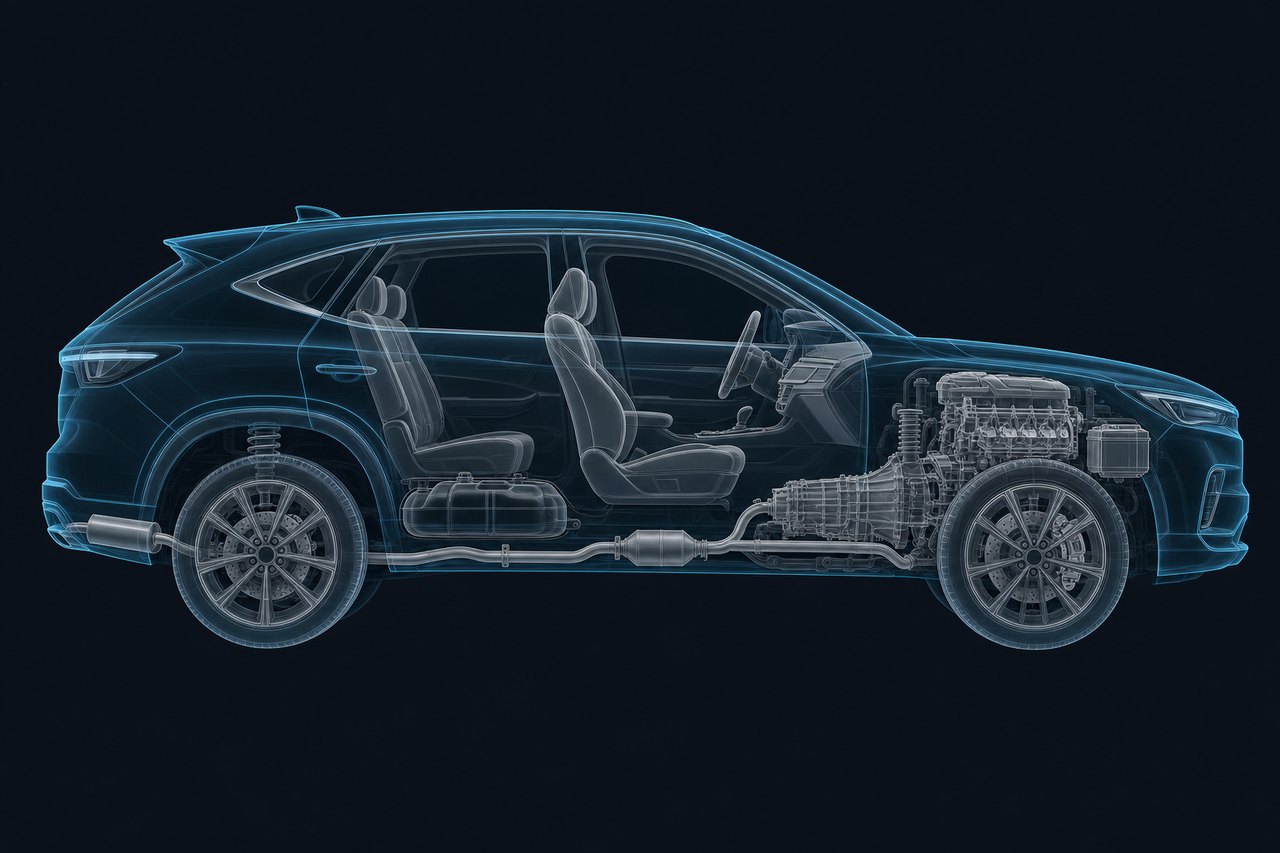
Mazda CX-5 2023: common problems
Owners filed 67 complaints with NHTSA about the 2023 Mazda CX-5, and the most reported components are service brakes (12), unknown or other (11), exterior lighting (11) and engine (10). Many exterior lighting reports describe a noisy or failing cooling fan inside an LED headlight. The data lists 8 crashes, 0 fires and no recalls for this model year. These are owner reports, not confirmed defects, and this data comes from the United States, so the same model may differ in other countries.
67
NHTSA complaints
0
recalls
8
complaints with a crash
What owners complain about
- Service brakes12 complaints
Owners describe automatic braking that activates without warning, a brake pedal that feels soft or loses resistance, and Smart Brake Support warnings that return after dealer visits. Others report a scraping sound when braking in reverse and vibration at highway speed.
Generic OBD2 barely sees this. Brakes and driver-assistance systems sit in separate control modules that a generic scanner usually cannot read.
- Unknown or other11 complaints
Several owners report a sunroof glass panel breaking suddenly while driving. Other single reports include a cracked cylinder head, unintended acceleration, a cooling fan running constantly, a dashboard click and the air conditioning blowing hot air while parked.
An OBD2 scanner sometimes picks this up. This group mixes different problems, so only the engine-related ones are likely to set codes.
- Exterior lighting11 complaints
Most samples describe a loud whirring or humming from a headlight, which owners attribute to a failing LED cooling fan. Owners say the headlight assembly must be replaced as a unit, quote costs around $2,000 after the warranty, and some mention a failing adaptive headlight motor.
Generic OBD2 barely sees this. Headlight fans and motors are usually not monitored through the engine computer, and owners say no warning light appeared.
- Engine10 complaints
Owners report oil use and low oil warnings, a P0524 low oil pressure code that returns after clearing, a leaking belt tensioner, a stall after fueling and a blown engine at 22,000 miles. A few describe the car lurching or accelerating on its own.
An OBD2 scanner usually picks this up. Engine problems often turn on the check engine light and store codes, though one owner reported a stall that left no codes.
- Electrical system9 complaints
Reports include an air conditioning compressor clutch that stopped engaging, a dead original battery after about 2 years, and a passenger occupant sensor triggered by keys or a phone. Others describe coolant temperature warnings and unintended acceleration while braking.
An OBD2 scanner sometimes picks this up. Battery, charging and coolant temperature faults can set codes, while seat sensors and air conditioning controls may not.
- Visibility and wipers6 complaints
Three owners say the sunroof glass exploded while driving, and two say the driver-side mirror vibrates at highway speed and blurs the view. One report describes slow windshield defogging after the air conditioning stopped working, and another a cracked windshield with no impact.
Generic OBD2 barely sees this. Glass, mirrors and wipers are body items that generally do not set codes a generic scanner can read.
- Forward collision avoidance6 complaints
Owners report random automatic braking, repeated Smart Brake System and forward radar warnings, and camera and blind spot sensor malfunctions in clear conditions. Two reports describe sudden unintended acceleration while parking.
Generic OBD2 barely sees this. Driver-assistance systems have their own modules that a generic scanner mostly cannot see.
- Lane departure5 complaints
Owners report blind spot sensor malfunction messages, one failed sensor with a quoted $3K repair, and lane keep assist that does not work. One owner says the messages clear after restarting the car.
Generic OBD2 barely sees this. Blind spot and lane keep systems are driver-assistance modules that a generic scanner mostly cannot read.
What to check if you own one
- Enter your VIN on NHTSA.gov/recalls or ask a Mazda dealer to check for open recalls and service bulletins, since the data here lists no recalls.
- If a headlight makes a whirring or humming noise, ask the dealer about it while the car is still under warranty.
- Check the oil level between oil changes and note any low oil warning light.
- If a brake or Smart Brake warning appears, write down when it happens and ask the dealer to check the driver-assistance system, not only to scan engine codes.
- Keep repair orders for repeat problems so you have a record if you need to ask for goodwill coverage.
Frequently asked questions
What are the most common problems with the 2023 Mazda CX-5?+
Owners filed 67 NHTSA complaints. The largest groups are service brakes (12), unknown or other (11), exterior lighting (11) and engine (10). Headlight fan noise and brake or driver-assistance warnings come up often in the samples.
Does the 2023 Mazda CX-5 have any recalls?+
The data lists no recalls for this model year. Check your VIN with Mazda or on NHTSA.gov/recalls, because new recalls can be added.
Can a basic OBD2 scanner find these problems?+
Engine, emissions and many electrical faults usually set codes it can read. Brakes, driver-assistance systems, headlights and glass mostly cannot be read by a generic scanner.
Data: owner complaints and recalls published by the US NHTSA, retrieved 2026-11-09. Complaints are owner reports, not confirmed defects. Summary written with the help of AI.